Where Do We Go From Here
1967 · Soultown 103 · Los Angeles, California
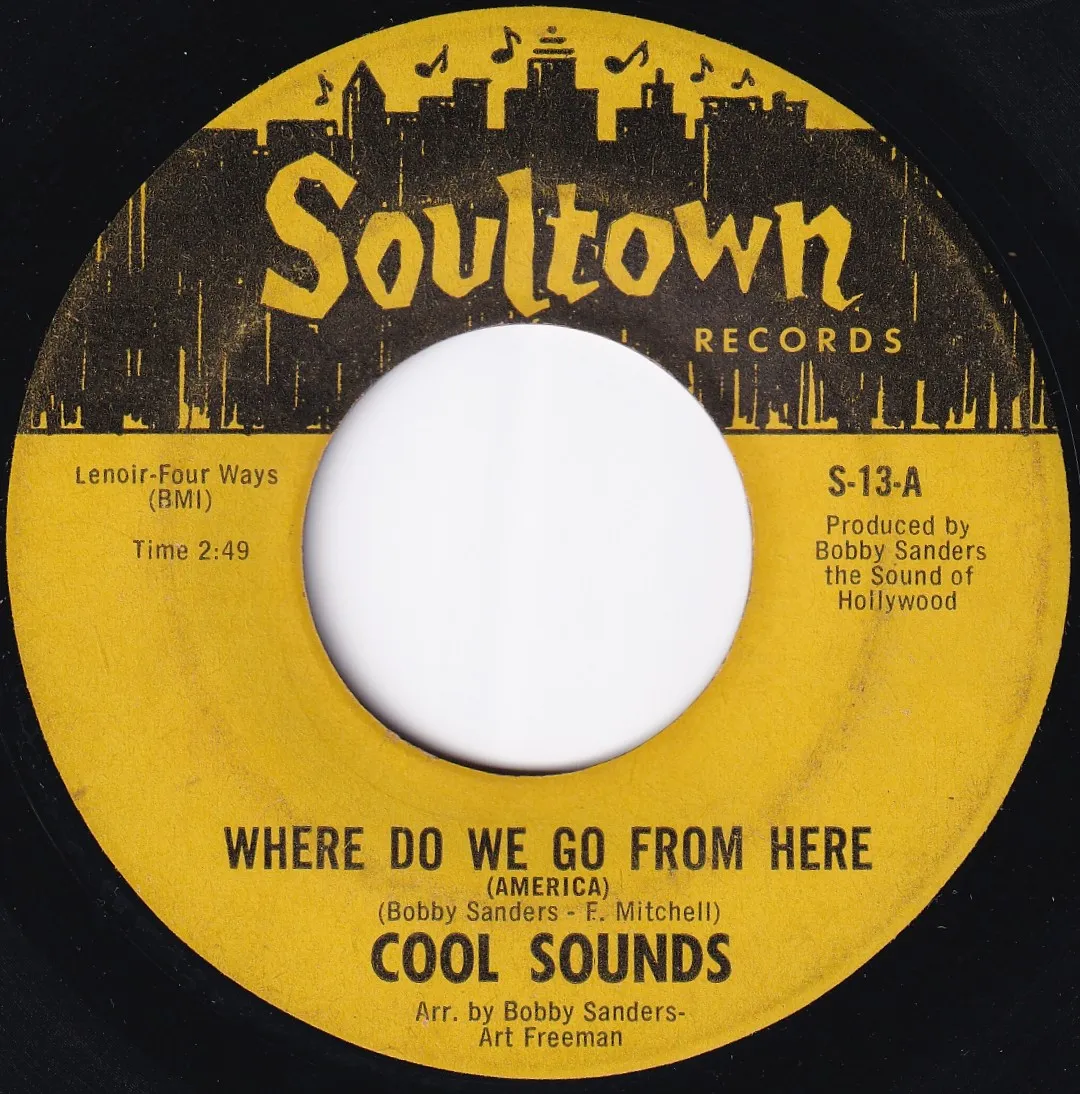
- Artist
- Cool Sounds
- Title
- Where Do We Go From Here
- Release
- Rag Doll / Where Do We Go from Here
- Year
- 1967
- Label
- Soultown # 103
- Format
- 7" · Single
- Language
- English
- Country
- Los Angeles, California, USA
- Genre
- Soul, Gospel & Funk · Soul
- Primary theme
- Peace, Protest & Anti-War
Annotation
The track "Where Do We Go From Here" (Soultown Records # P-103) put forward a strong critique of the US, with a small reference to the Vietnam conflict. Originally released on the small Los Angeles, Californian label Soultown, it was later issued in 1971 - I'll Take You Back (If You Promise) / Where Do We Go From Here (America) (Warner Bros. Records # 7538). Bobby Sanders - West Coast soul producer and owner of Soultown - produced the song, co-wrote it with Fulton Mitchell, and co-arranged it with Art Freeman. The narrator said that "we have conquered the atom bomb, almost Vietnam", and that the US government continued "to practice hate". The song referred to contradictions within the US, such as between the races and the social-economic classes. Thus, argued the narrator, the US "lacked unity" and that the country needed to "clean up" its "own backyard". The track goes down in the anti-Vietnam camp, although it is not explicitly stated.
Annotation by Justin A. Brummer
Annotation — Civil Rights Songs
The track "Where Do We Go From Here" (Soultown Records # P-103) put forward a strong critique of the US, with a small reference to the Vietnam conflict. Originally released on the small Los Angeles, Californian label Soultown, it was later issued in 1971 - I'll Take You Back (If You Promise) / Where Do We Go From Here (America) (Warner Bros. Records # 7538). Bobby Sanders - West Coast soul producer and owner of Soultown - produced the song, co-wrote it with Fulton Mitchell, and co-arranged it with Art Freeman. The narrator said that "we have conquered the atom bomb, almost Vietnam", and that the US government continued "to practice hate". The song referred to contradictions within the US, such as between the races and the social-economic classes, falling into the Civil Rights category. Thus, argued the narrator, the US "lacked unity" and that the country needed to "clean up" its "own backyard". The track goes down in the anti-Vietnam camp, although it is not explicitly stated.
Annotation by Justin A. Brummer
About the artist
Unknown - no citable biography of the act credited on this release could be established. [Source: Discogs]
Themes
In collections
Civil Rights Songs · Peace, Protest, & Anti-War Songs · Soul, Gospel, & Funk Songs