Last Train to Nuremberg
1971 · Columbia 4-45398 · New York City, New York
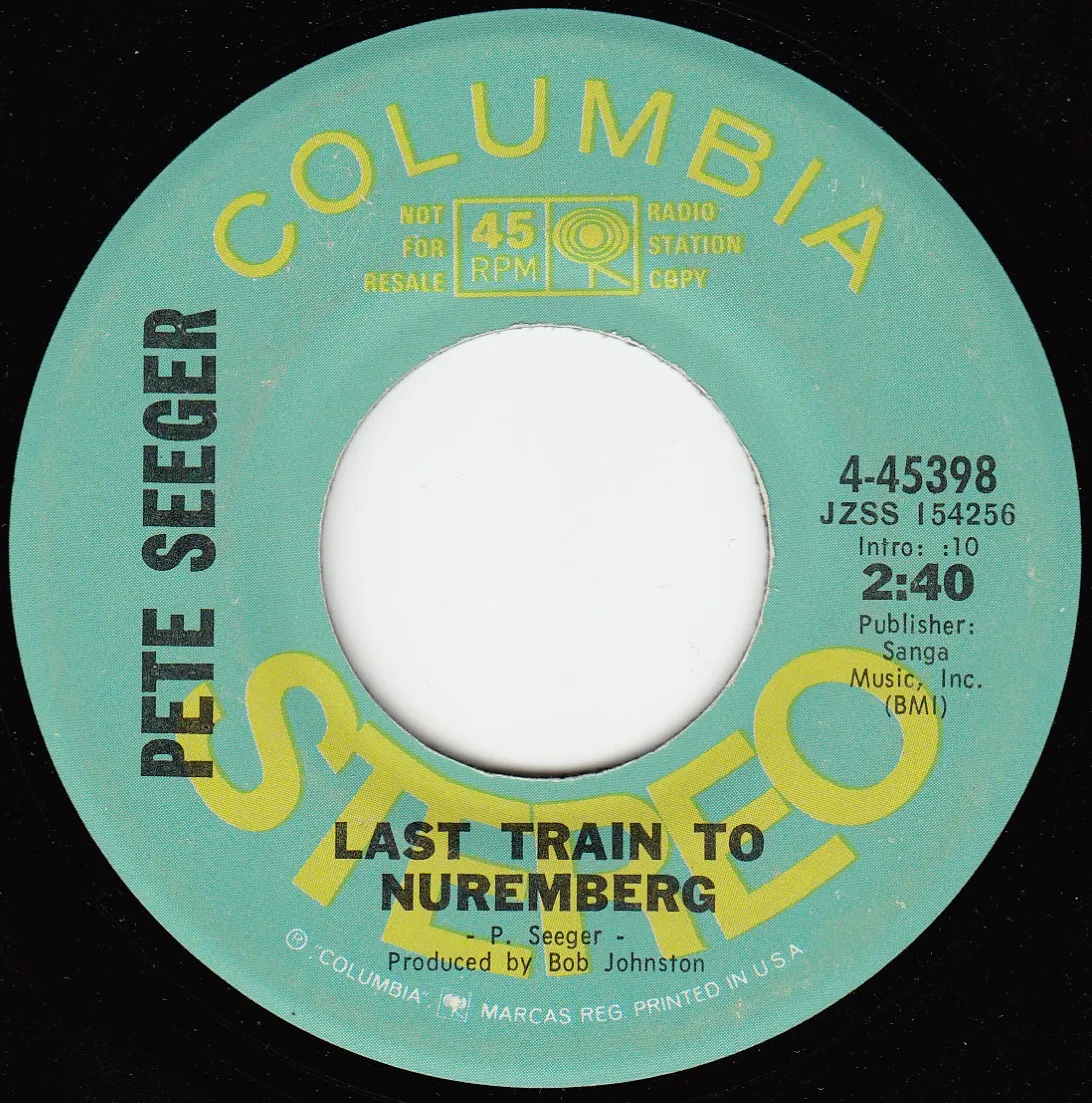
- Artist
- Pete Seeger
- Title
- Last Train to Nuremberg
- Release
- My Rainbow Race / Last Train to Nuremberg
- Year
- 1971
- Label
- Columbia # 4-45398
- Format
- 7" · Single
- Language
- English
- Country
- New York City, New York, USA
- Genre
- Folk · Contemporary Folk
- Primary theme
- Peace, Protest & Anti-War
Annotation
Iconic American contemporary folk singer, Pete Seeger (born 3 May 1919 in Manhattan, New York, USA, died on 27 January 2014, same location) played a key role in the 1950s contemporary folk revival and the 1960s anti-war and Civil Rights movement. He often wrote political songs, protesting against war, segregation, and calling for environmental protection. (1) His body of songs referencing the Vietnam War is significant in both themes and volume [currently 18 identified]: "The Willing Conscript" on the album Broadside Ballads Volume 2 (1963); "Beans in My Ear", "King Henry", and "The Draft Dodger Rag" on the Dangerous Songs!? (1966); "Waist Deep in the Big Muddy" and "Down By the Riverside" on the album Waist Deep in the Big Muddy and Other Love Songs (1967); "Backlash Blues", "Talking Ben Tre", and "The Torn Flag" on the album Pete Seeger Now (1968); "Anti-Vietnam Songs / Waist Deep in the Big Muddy / Arts in a Changing Society / Violence and Protest" featured on the live album Sings and Answers Questions (1968); "Bring Them Home" and "Ballad of the Fort Hood Three" on the album Young vs. Old (1969); "I Feel Like I'm Fixin' to Die Rag" (1970) [promo single-only]; "Last Train to…
Annotation by Justin A. Brummer
Annotation — Pete Seeger Songs
Seeger's 1971 anti-war song "Last Train to Nuremberg" (Columbia Records # 4-45398) condemned the My Lai massacre and pointed the finger at several layers of society that had "blood upon" their "hands". Nuremberg refered to the location of the criminal trials that took place after the Second World War. Therefore, in the lyrics, Seeger imagined those responsible for the My Lai atrocities to be together on a train, to face justice for their crimes. Firstly, it named two of the soldiers involved - the well-known William Calley, and Captain Medina (a commanding officer of the platoon in question - is this the only song to mention him)? He faced court-martial for war crimes, but was acquitted in 1971. (2) Seeger then moved on to the politicians, referring to Richard Nixon and "both houses of Congress" - wanting to know "who gave the orders?" and "planned the campaign" (which could have meant either the politicians or the military establishment). Seeger then turned his attention to the military-industrial complex, asking the question: "who manufactured the bullet". Finally, Seeger took his analysis a step further, pointing the finger at all Americans, singing: "do I see the voters, me…
Annotation by Justin A. Brummer
About the artist
Born 3 May 1919 in Manhattan, New York, USA, died on 27 January 2014, same location
Themes
Anti-War · My Lai · Anti-Calley · Medina · Samuel Koster · Nixon
In collections
My Lai & Lt. William Calley Songs · Peace, Protest, & Anti-War Songs · Pete Seeger Songs