Talking Vietnam
1964 · Elektra EKL 269 · New York City, New York
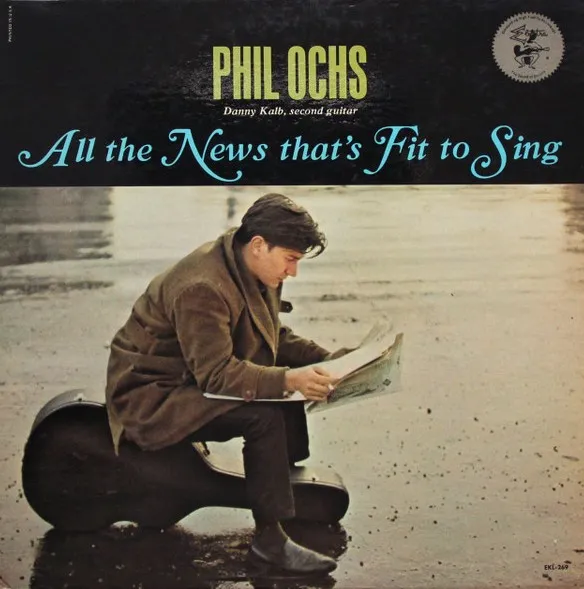
- Artist
- Phil Ochs
- Title
- Talking Vietnam
- Release
- All the News That's Fit to Sing
- Year
- 1964
- Label
- Elektra # EKL 269
- Format
- LP · Album
- Language
- English
- Country
- New York City, New York, USA
- Songwriter
- Phil Ochs
- Genre
- Folk · Contemporary Folk
- Primary theme
- Peace, Protest & Anti-War
Annotation
The track "Talking Vietnam" (Elektra Records # EKL-269) told the story of a US soldier sent to South East Asia to train the South Vietnamese. Ochs took a critical view of the US government's objectives - to establish an independent, non-communist South Vietnam: "sailing over to Vietnam...training a million Vietnamese, to fight for the wrong government, and the American way". The lyrics of the song first appeared in the New York based publication Broadside # 32, 20 September 1963. A mimeographed publication, Sis Cunningham and Gordon Friesen founded the magazine in 1962 to promote contemporary folk and protest songs. It also had a music label: Broadside Records. It usually published both lyrics and notations of songs, as well as articles and interviews about folk music, and newspaper clippings of current events. While many of the songs would have been played at the folk clubs and festivals, not all of the artist recorded the songs. Written in 1963 before the major US military escalation, Ochs drew attention to an issue that many people did not know - in the 1964 presidential election 2/3rds of Americans said that they paid little or no attention to Vietnam.1 However, the Vietnam conflict had started to rise in the news agenda. The US had over 15,000 personnel in South Vietnam - mainly military experts, for training and support. Furthermore, on 7 August 1964, the US Congress passed the Gulf of Tonkin Resolution, following a naval clash between North Vietnam and US forces, which permitted President Lyndon B. Johnson (1963-1969) to send conventional forces to Vietnam.2 Thus, Vietnam started to become a focal point in the news and with topical singers. Ochs turned his attention to the soldiers devastating activities, further indicating his anti-war stance. Ochs also criticised the South Vietnamese President Ngo Dinh Diem (1955-1963), which some people called an American "puppet" president. A Roman Catholic, he came into conflict with South Vietnam's Buddhist majority. Note the reference to Chiang Kai-shek - the former leader of mainland China (before World War Two), and later the leader of Taiwan. His forces were in Vietnam in 1946 following the Japanese surrender.Sources1JSTOR article↩2The Avalon Project (Yale Law School): Gulf of Tonkin Resolution↩
Annotation by Justin A. Brummer
Annotation — Peace, Protest, & Anti-War Songs
The track "Talking Vietnam" (Elektra Records # EKL-269) told the story of a US soldier sent to South East Asia to train the South Vietnamese. Ochs took a critical view of the US government's objectives - to establish an independent, non-communist South Vietnam: "sailing over to Vietnam...training a million Vietnamese, to fight for the wrong government, and the American way". The lyrics of the song first appeared in the New York based publication Broadside # 32, 20 September 1963. A mimeographed publication, Sis Cunningham and Gordon Friesen founded the magazine in 1962 to promote contemporary folk and protest songs. It also had a music label: Broadside Records. It usually published both lyrics and notations of songs, as well as articles and interviews about folk music, and newspaper clippings of current events. While many of the songs would have been played at the folk clubs and festivals, not all of the artist recorded the songs. Written in 1963 before the major US military escalation, Ochs drew attention to an issue that many people did not know. Ochs looked at the soldiers devastating activities, further indicating his anti-war stance. Ochs also criticised the South Vietnamese President Ngo Dinh Diem (1955-1963), which some people called an American "puppet" president. A Roman Catholic, he came into conflict with South Vietnam's Buddhist majority. Note the reference to Chiang Kai-shek - the former leader of mainland China (before World War Two), and later the leader of Taiwan. His forces were in Vietnam in 1946 following the Japanese surrender.
Annotation by Justin A. Brummer
Annotation — Phil Ochs
The track "Talking Vietnam", on the album All the News That's Fit to Sing (Elektra Records # EKL-269) told the story of a US soldier sent to South East Asia to train the South Vietnamese. Ochs took a critical view of the US government's objectives - to establish an independent, non-communist South Vietnam: "sailing over to Vietnam...training a million Vietnamese, to fight for the wrong government, and the American way". The lyrics of the song first appeared in the New York based publication Broadside # 32, 20 September 1963. A mimeographed publication, Sis Cunningham and Gordon Friesen founded the magazine in 1962 to promote contemporary folk and protest songs. It also had a music label: Broadside Records. It usually published both lyrics and notations of songs, as well as articles and interviews about folk music, and newspaper clippings of current events. While many of the songs would have been played at the folk clubs and festivals, not all of the artist recorded the songs. Written in 1963 before the major US military escalation, Ochs drew attention to an issue that many people did not know - in the 1964 presidential election 2/3rds of Americans said that they paid little or no attention to Vietnam.2 However, the Vietnam conflict had started to rise in the news agenda. The US had over 15,000 personnel in South Vietnam - mainly military experts, for training and support. Furthermore, on 7 August 1964, the US Congress passed the Gulf of Tonkin Resolution, following a naval clash between North Vietnam and US forces, which permitted President Lyndon B. Johnson (1963-1969) to send conventional forces to Vietnam.3 Thus, Vietnam started to become a focal point in the news and with topical singers. Ochs turned his attention to the soldiers devastating activities, further indicating his anti-war stance. Ochs also criticised the South Vietnamese President Ngo Dinh Diem (1955-1963), which some people called an American "puppet" president. A Roman Catholic, he came into conflict with South Vietnam's Buddhist majority. Note the reference to Chiang Kai-shek - the former leader of mainland China (before World War Two), and later the leader of Taiwan. His forces were in Vietnam in 1946 following the Japanese surrender. Sources2JSTOR article↩3The Avalon Project (Yale Law School): Gulf of Tonkin Resolution↩
Annotation by Justin A. Brummer
Lyrics
English: We burned some villages down to the floor / Yes we burned out the jungles... / Threw all the people in relocation camps / Under lock and key, made damn sure they’re free... / Who should I meet but President Diem / Said you’re fighting to keep Vietnam free... / That means rule by one family... / He said: "I was a fine old Christian man / Ruling this backward Buddhist land'... / It sure beats hell out of Chiang Kai-shek / I’m the power elite, me and the 7th fleet
About the artist
Phil Ochs, a leading protest / topical singer, born 19 December 1940 in El Paso, Texas, USA, and died on 9 April 1976, in Far Rockaway, New York, USA. He often played songs at anti-war and civil rights rallies in the 1960s and early 1970s, including outside the Democratic National Convention in 1968. He released many anti-Vietnam War songs during the era, which included "Talking Vietnam", one of the first Vietnam songs released, on his 1964 album All the News That's Fit to Sing. Other prominent songs included "I Ain't Marching Anymore", "Draft Dodger Rag", and "Days of Decision" on I Ain't…