How Do You Tell a Small Boy
1973 · Voices in Vital America P.O.W. 1873 · Los Angeles, California
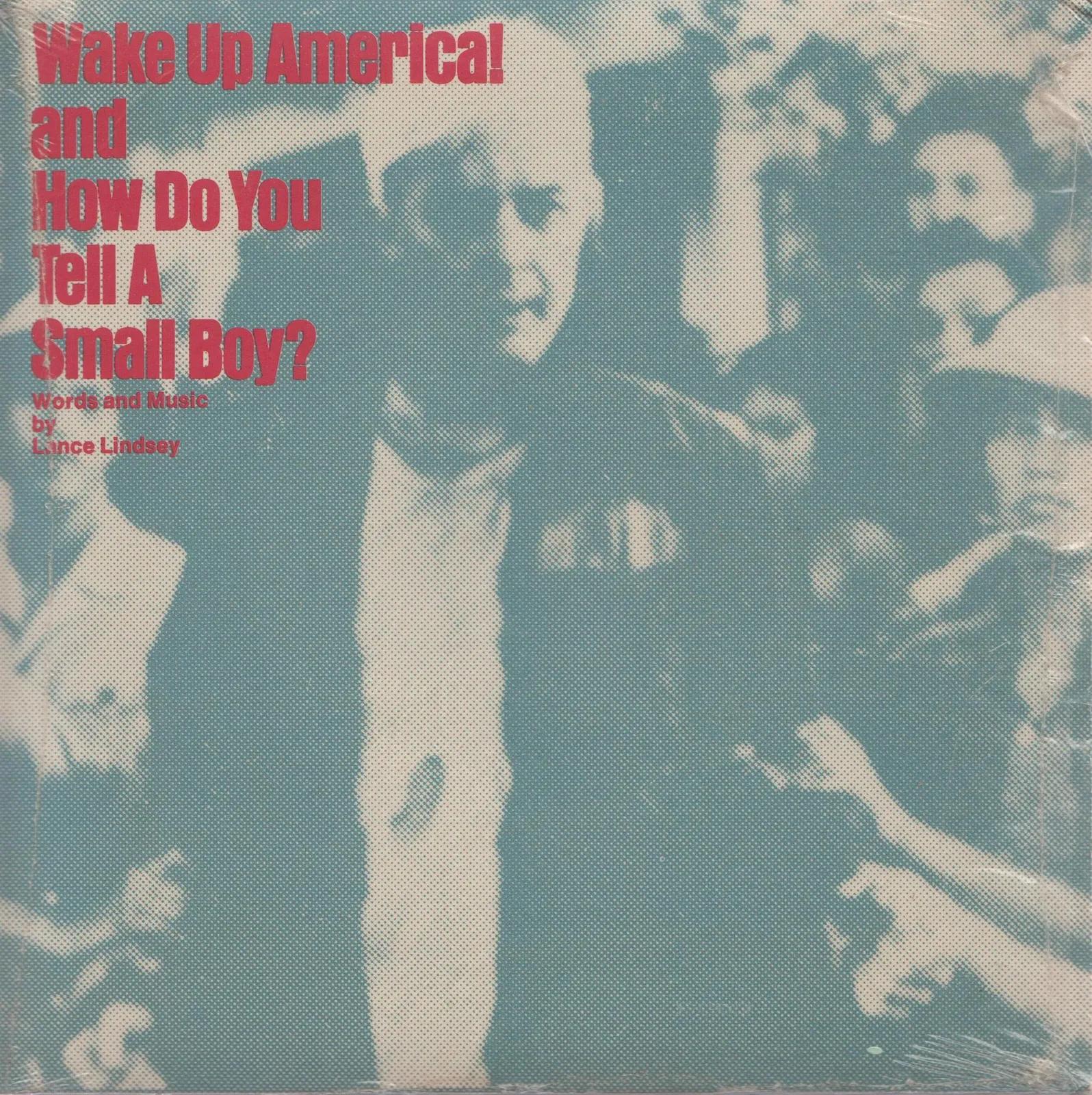
- Artist
- Lance Lindsay
- Title
- How Do You Tell a Small Boy
- Release
- Wake Up America! / How Do You Tell a Small Boy
- Year
- 1973
- Label
- Voices in Vital America # P.O.W. 1873
- Format
- 7" · Single
- Language
- English
- Country
- Los Angeles, California, USA
- Songwriter
- Lance Lindsay
- Genre
- Traditional Pop · Traditional Pop
- Primary theme
- Home Front Perspective / Soldier's Perspective
Annotation
A double-sided Vietnam single, written and sung by Lance Lindsay. Bruce Miller arranged both sides. Released by Voices in Vital America (VIVA) - a not-for-profit student organisation formed in 1967 in Los Angeles by Carol Oates, under the name Victory in Vietnam Association, this group sought to counter campus radicalism while promoting concern for US soldiers missing in action and prisoners of war. They famously distributed metal bracelets, with details of those M.I.A. or P.O.W., selling over 5 million. The group disbanded in 1976.1 Many of its records are held at the Vietnam Center and Archive, at Texas Tech.2 The back of the picture sleeve said that "over 1800 men are prisoners of war or missing in action. A picture of Lt. Ron Dodge (front cover) being escorted by North Vietnamese soldiers appeared in 'Paris March' magazine on Sept. 9 1967. Despite this evidence, Lt. Dodge is among the many men that Hanoi refuses to discuss or admit are prisoners...the solution to this tragic war must include neutral international inspection and identification of all prisoners of war in Southeast Asia. Only the strength of an outraged public can force Hanoi to disclose the fate of these men". The sleeve also said that all proceeds for this record went to VIVA to supports their projects. The Vietnamese returned the remains of Lt. Ron Dodge to the US in 1981.3 In the first song "Wake Up America!" (Voice in Vital America # 1873), the narrator described the soldier in prison: "in a cell waits a man". Meanwhile his wife "prays alone each night", hoping for his safe return, thus showing the impact the P.O.W. situation had on families back home. Finally, the narrator called on the listener to help raise awareness of the P.O.W.s, making a list of all those missing in Vietnam, in order to help secure their release. Note the reference to the P.O.W.s from the Korean War.The second song "How Do You Tell a Small Boy", narrated from the perspective of a P.O.W., looked at the impact of a missing father on a child. The P.O.W. wondered how to explain to his son that he "had to go to war", and that he spent most of his "time on a prison floor". The P.O.W. missed many of his son's life events: receiving his first bike, going to school, meeting his friend, playing in the snow. The father concluded that while he could not make up the time, and that his son paid the cost, he intended to stay home. Sources1The Encyclopedia of the Vietnam War (Spencer C. Tucker, 2011)↩2The Vietnam Center and Sam Johnson Vietnam Archive, Texas Tech University↩3P.O.W. Network↩
Annotation by Justin A. Brummer
Annotation — P.O.W. / M.I.A. Songs
The second song "How Do You Tell a Small Boy", narrated from the perspective of a P.O.W., looked at the impact of a missing father on a child. The P.O.W. wondered how to explain to his son that he "had to go to war", and that he spent most of his "time on a prison floor". The P.O.W. missed many of his son's life events: receiving his first bike, going to school, meeting his friend, playing in the snow. The father concluded that while he could not make up the time, and that his son paid the cost, he intended to stay home.
Annotation by Justin A. Brummer
Lyrics
English: His hair was long and it tumbled down across his face... / He stared at me with a funny look, as he held...a comic book / I thought I'd cry, but dads don't cry, his words were short / With a question why, are you the lost man that make mum cry? / Have you come home to be my dad, maybe mum now won't be so sad / Don't you know we missed you so / How do you till a small boy that you had to go to war / That you spent most of your time on a prison floor / That you wanted to be with him, sometimes late at night I swear that you heard him call / We sat on a bench and we talked a lot about his first bike that his mum had bought / His first day at school and his best friend Joe / His dad first took him to see the snow / How could he know that I couldn't go / I tried to explain the reason why I wasn't there / But I dared not try, you can't make up for the time he's lost / He needed me, he payed the cost / I wasn't there... / Son I'm home now, I intend to stay
Notes
Voices in Vital America P.O.W. 1873, pale blue label with red print, ℗ 1973 Voices in Vital America; A-side "Wake Up America" by Lance Lindsay and the Glendale College Choir, 2:30; B-side "How Do You Tell a Small Boy" by Lance Lindsay, 3:32; both sides words and music by Lance Lindsay and arranged by Bruce Miller. [From the record sleeve and labels] Picture sleeve: the front, headed "Wake Up America! and How Do You Tell A Small Boy? Words and Music by Lance Lindsey" (spelled Lindsey on the front, Lindsay on the back and the label), shows Lt. Ron Dodge being escorted by North Vietnamese soldiers. The back reads: "Over 1800 men are prisoners of war or missing in action. A picture of Lt. Ron Dodge (front cover) being escorted by North Vietnamese soldiers appeared in "Paris Match" magazine on Sept. 9, 1967. Despite this evidence, Lt. Dodge is among the many men that Hanoi refuses to discuss…
About the artist
Singer-songwriter of the double-sided POW/MIA advocacy single 'Wake Up America!' / 'How Do You Tell a Small Boy' (1973, catalogue 'P.O.W. 1873'), which he wrote and sang, with both sides arranged by Bruce Miller. The 45 was released by Voices in Vital America (VIVA), the Los Angeles not-for-profit student organisation (founded 1967) famous for distributing over five million POW/MIA bracelets; the sleeve pictured POW Lt. Ron Dodge. No personal biographical details found. [Source: antiwarsongs.org / 45cat / Discogs]